Graphic Bible · Scene 4 of 14
Historical Library · Extra-canonical text
1 Enoch 22
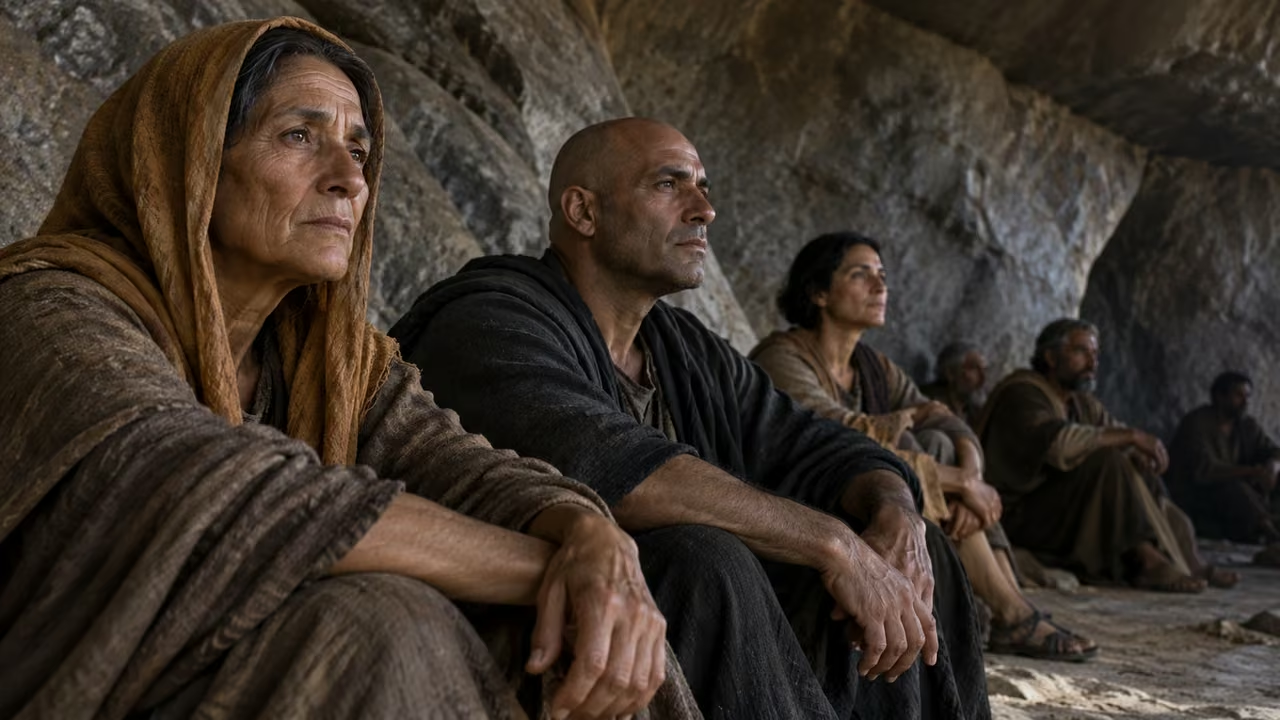
The selected Charles 1906 edited text and its POB working translation, not a new manuscript collation. Images are disclosed interpretations, not divine portraits, authenticated events or physical cosmology. Chapter artwork disclosure: Cinematic hyper-realistic fictional casting and visionary natural-rock staging, not authenticated portraits, geography, afterlife architecture or a doctrine of bodily soul substance. Clothed figures visualize spirits without supernatural body effects. Raphael is not a divine portrait. The text describes four places; the note at 22:2 identifies the three dark places and the bright place with a spring as coming from the Greek form of the passage; beautiful and rolling are not silently translated as caverns. No source uncertainty is resolved by the artwork. God remains unpictured. Abel’s fictional identity follows the existing published Genesis4 design, adapted to cinematic realism, not an authenticated portrait. Cord binding is illustrative staging, not a source-attested instrument or identification of the unnamed he. Still waiting figures do not resolve resurrection, annihilation or immortality doctrine. The three-versus-four numeral tension is not reconciled by the scenes.
Source and translation notes
· Geʿez
Source edition: charles-1906-enoch
Current canonical draft wording shown for private artwork and source review. This does not certify manuscript wording, human review, scene alignment, or publication.
Chapter and verse addresses follow the supplied selected-edition POB records. Each available verse is displayed once; artwork does not certify source completeness.
- 22:2[a] The Ge'ez words translated “beautiful” and “rolling” are damaged, and their meaning is uncertain.
- 22:2[b] The description of three dark places and one bright place with a spring comes from the Greek form of this passage.
- 22:3[a] The Ge'ez word translated “beautiful” is unclear.
- 22:4[a] The Ge'ez wording is damaged, especially where it describes how long the souls remain here.
- 22:8[a] The Ge'ez wording about “the judgment as a whole” is unclear.
- 22:9[a] Verse 2 describes four places, but this verse says three.
- 22:11[a] The Greek form describes these people as “accursed forever.”
- 22:11[b] The final phrase is unclear in the Ge'ez, including what “this” refers to.
- 22:13[a] This may mean that they will not be raised from the dead, or that they will never leave this place.
1 Enoch 22:4
Waiting for Judgment
The Gathering Places of the Dead · 1 Enoch 22
Story guide: The gathered dead wait in their places until the appointed time of great judgment.
Open this scene in the reader →4These places were made to hold them until the day of their judgment, until their allotted time is complete—a long wait for the great judgment to come upon them.
Step through the story beside the Scripture itself. About the People’s Open Bible