Graphic Bible · Scene 6 of 10
Historical Library · Extra-canonical text
1 Enoch 40
The selected Charles 1906 edited text and its POB working translation, not a new manuscript collation. Images are disclosed interpretations, not divine portraits, authenticated events or physical cosmology.
Source and translation notes
· Geʿez
Source edition: charles-1906-enoch
Selected edited-edition working text. Source review and these notes do not establish human-specialist, independent-manuscript or full-book certification.
Chapter and verse addresses follow the supplied selected-edition POB records. Each available verse is displayed once; artwork does not certify source completeness.
- 40:2[a] The concrete word is “wings,” which can also refer to extremities or sides. “Faces” is retained as the visionary description rather than silently replaced with “beings.” The repeated “I saw” follows the selected text; Charles notes that some witnesses attach the opening occurrence to the preceding sentence.
- 40:5[a] The participle can mean suspended or hanging upon, and by extension attached to or dependent upon someone. “Cling to” follows this attachment sense; the verse does not say that these chosen ones were crucified.
- 40:6[a] The selected asking, praying and entreating clauses have uneven singular/plural forms. Charles explicitly labels the asking/praying expression and the final entreating form as emendations in printed page81 notes6 and8. This rendering relates the entreaty to the third voice; the final plural expression can also be connected with the dwellers just mentioned. It is a rendering of the selected edited text, not a claim that every manuscript has this wording.
- 40:7[a] The selected word is plural. It designates accusing adversaries, “satans,” not a single named figure. The negative is retained: they are not permitted to enter and accuse the earth’s inhabitants.
- 40:9[a] Mikael, Rufael, Gebriel and Fanuel follow the selected Ethiopic name forms rather than silently substituting their more familiar English spellings. The fourth figure is linked with repentance and hope; the text does not explicitly name a separate office beyond the relation stated here.
1 Enoch 40:6
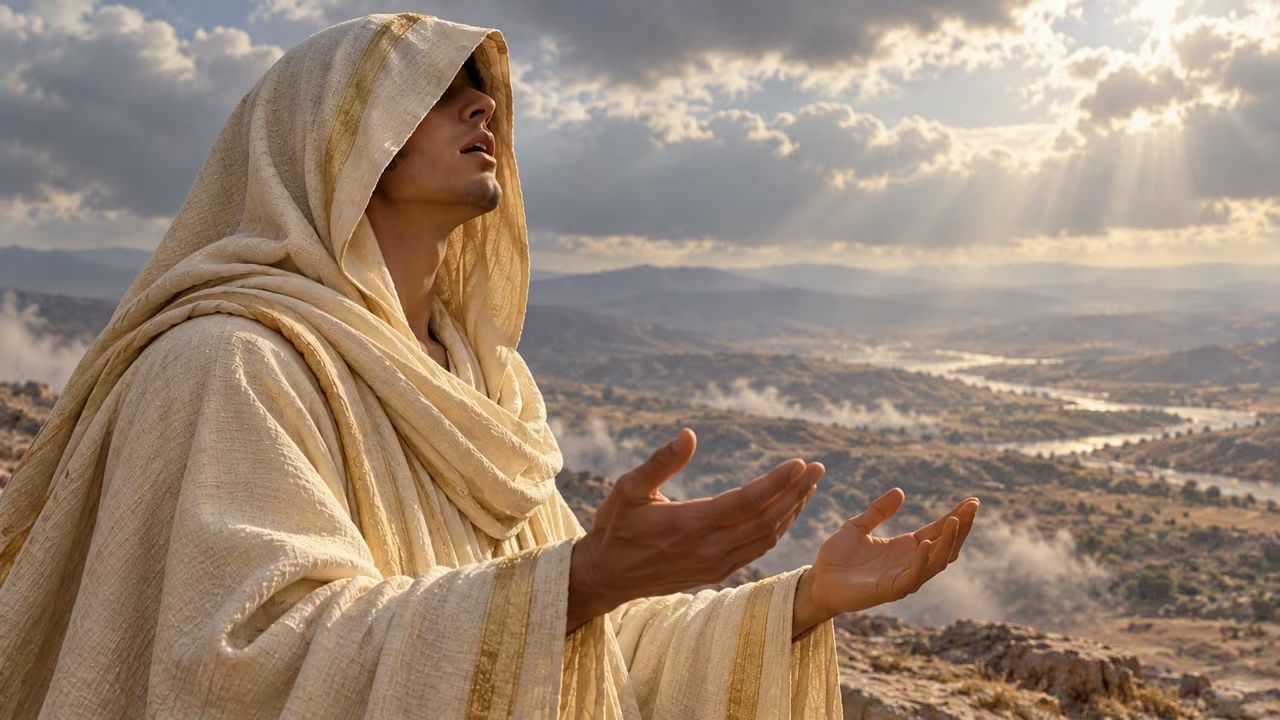
Prayer for Dry Land
Four Voices and Four Names · 1 Enoch 40
Story guide: The third voice prays for those who dwell on dry land and makes entreaty on their behalf.
Open this scene in the reader →6I heard the third voice asking and praying for those who dwell on dry land, and making entreaty in the name of the Lord of Spirits.
Step through the story beside the Scripture itself. About the People’s Open Bible