Graphic Bible · Scene 3 of 8
Historical Library · Extra-canonical text
1 Enoch 46
The selected Charles 1906 edited text and its POB working translation, not a new manuscript collation. Images are disclosed interpretations, not divine portraits, authenticated events or physical cosmology.
Source and translation notes
· Geʿez
Source edition: charles-1906-enoch
Selected edited-edition working text. Source review and these notes do not establish human-specialist, independent-manuscript or full-book certification.
Chapter and verse addresses follow the supplied selected-edition POB records. Each available verse is displayed once; artwork does not certify source completeness.
- 46:1[a] Head of Days preserves the recurring designation, literally one who has a head of days; it is not silently replaced by a named theological identity. The same designation appears explicitly again in46:2 and47:3. Grace here includes gracious beauty or attractiveness: Dillmann1865 col1317 explicitly cites46:1 under that visual sense. A human-looking face does not by itself identify this figure with a later named person.
- 46:2[a] The selected expression one of the angels is starred and daggered. Charles printed86 note13 proposes simply angel because of the single guide in this section, but that conjecture is not inserted here. The selected numeral one and plural angels remain. Son of man is the source’s human designation; no later named identification is supplied.
- 46:3[a] The selected final phrase speaks of his portion or allotted share prevailing; it is not replaced by an unprinted kingdom, independent rank or named person. The relative and possessive construction is compressed, and this English relates it to the son of man. The two actual printed titles here use መንፈሳት; no universal spelling rule from another chapter supplies them.
- 46:4[a] The selected raising verb has an initial dagger, with no closing partner printed. Dillmann1865 col637 supports raise or cause to rise; Charles printed86 note35, continued87, considers it corrupt and proposes cast down by comparison with46:5. This English retains raise rather than silently installing that conjecture. The actual next noun is ለጓማተ, interpreted as bridles (primary col61, explicit46:4), not OCR ለኃማተ or a guessed jaw word. Charles printed87 note1 calls the printed loosen-bridles construction strange. The punitive context does not authorize silently reversing the selected direction of the first verb.
- 46:5[a] The selected opening overthrow clause is bracketed. Charles printed86–87 note35 regards it as a marginal alternative to the raising clause of46:4, later intruded into the text. Both are retained in their actual different critical statuses, not made into a single unqualified cast-down reading. The three printed negatives remain explicit. From where their kingdom was given is awkward source wording, not a claim that they created their own authority.
- 46:6[a] Cast down their faces retains the selected face/overturn idiom, rather than supplying a new physical injury. The starred ዕፀያት is the worm word: Dillmann1865 cols1026–1027 gives worms and explicitly cites46:6; it is not the tree/wood noun. Both negatives are retained, including the starred not before exalt. The selected title spelling was checked on this occurrence, not copied from the OCR form.
- 46:7[a] The selected stars/judging/raised-hands stanza is damaged. Charles printed87 note24, continued88, proposes a reconstruction through Daniel8:10 that casts stars down and tramples them; it requires changing the judging verb and supplying an object. This English does not adopt those conjectures, add a new trampling object, or make the selected people into a modern astronomical mechanism. It retains a readable diplomatic judging-stars construction while openly declining to certify its earlier meaning. The selected dwelling clause is also considered an intrusion by Charles but is not bracketed in the printed main text; it remains here. Those are editorial diagnoses, not independently collated manuscript facts.
- 46:8[a] The actual assembly word is ምስትጉባኤ, not raw OCR ምስጉባኒአ. Dillmann1865 col1173 supports congregation/assembly. Cling retains the attachment/dependence sense of the selected hanging participle, not an assertion that the faithful were crucified. His remains an implicit possessive rather than a newly identified named person.
1 Enoch 46:3
Righteousness and Hidden Storehouses
The Head of Days and the Fate of the Mighty · 1 Enoch 46
Story guide: The angel explains the figure’s righteousness and enduring portion before describing the hidden storehouses he uncovers.
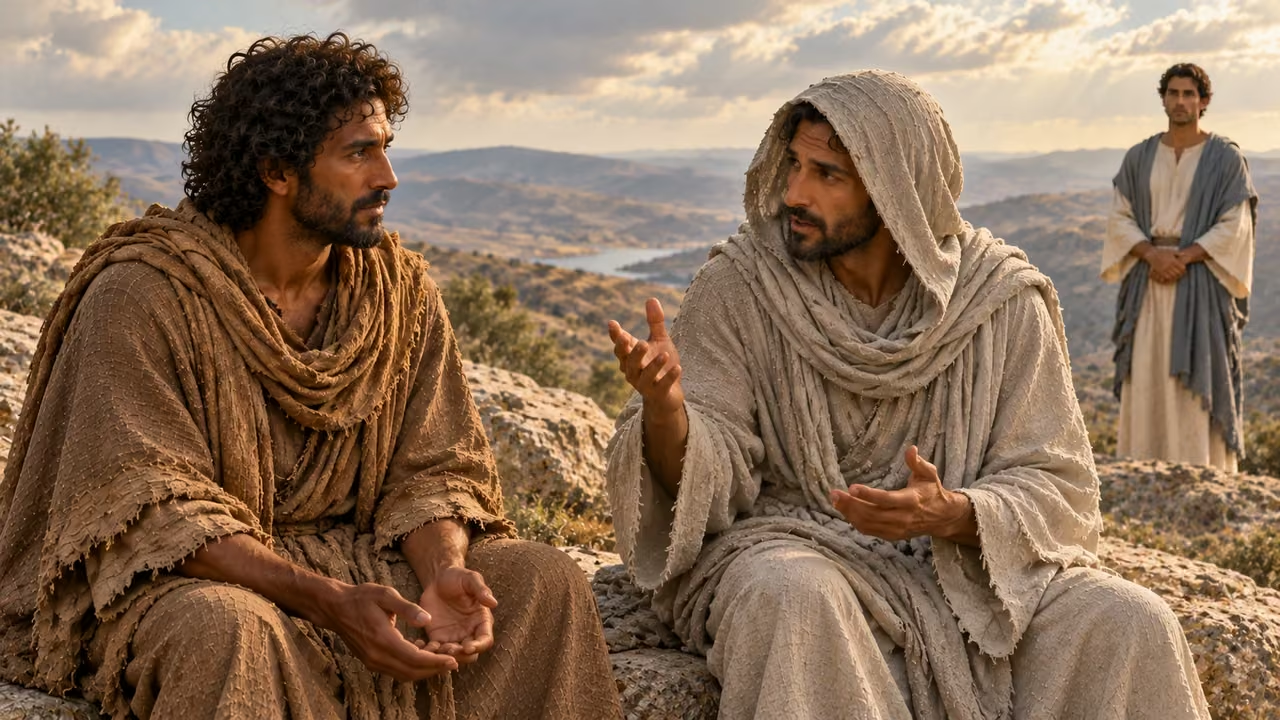
Open this scene in the reader →3He answered me, “This is the son of man who has righteousness. Righteousness has dwelt with him, and he uncovers all the hidden storehouses, because the Lord of Spirits has chosen him. His portion has prevailed before the Lord of Spirits in uprightness forever.”
Step through the story beside the Scripture itself. About the People’s Open Bible