Graphic Bible · Scene 2 of 13
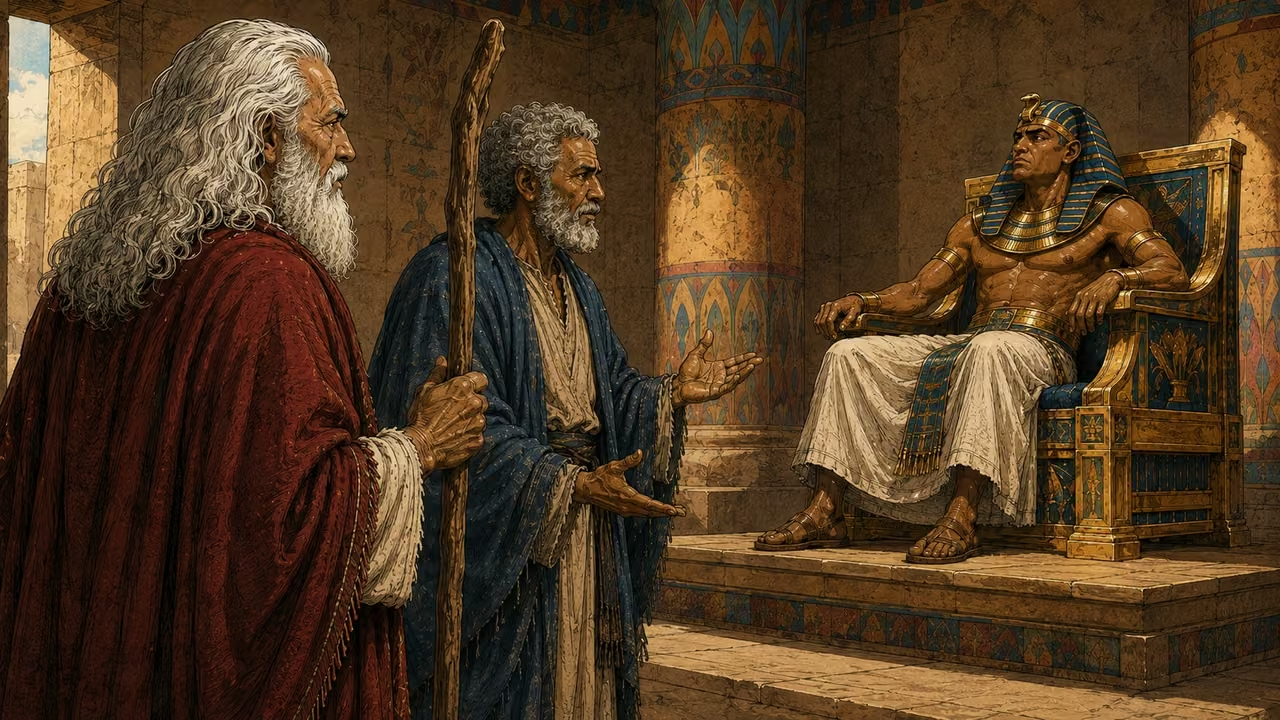
Exodus 10:3-6
What the hail left
Tell your children · Exodus 10
Story guide: Moses and Aaron warn Pharaoh that locusts will consume what remains.
Open this scene in the reader →3So Moses and Aaron went in to Pharaoh and said to him, “Thus says Yahweh, the God of the Hebrews: How long will you refuse to humble yourself before me? Let my people go, so that they may serve me.”
4For if you refuse to let my people go, behold, tomorrow I will bring locusts into your territory.
5And it will cover the surface of the land, so that one will not be able to see the land; and it will eat what remains of the survivors left to you from the hail, and it will eat every tree growing for you out of the field.
6And they will fill your houses, the houses of all your servants, and the houses of all Egypt—something your fathers and your fathers’ fathers have not seen from the day they were on the land until this day.” Then he turned and went out from Pharaoh.
Step through the story beside the Scripture itself. About the People’s Open Bible