Graphic Bible · Scene 3 of 6
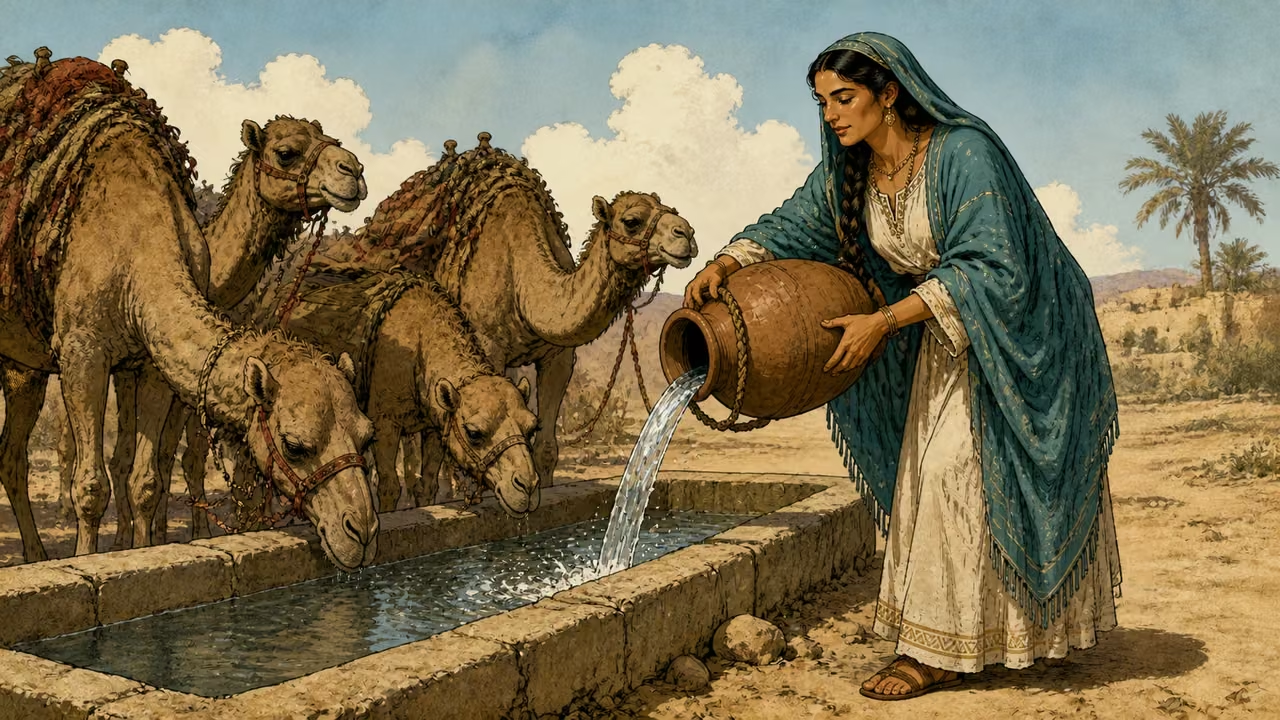
Genesis 24:15-27
Rebekah Draws Water
Rebekah at the Well · Genesis 24
Story guide: Rebekah waters the servant’s camels, and he worships Yahweh for leading him.
Open this scene in the reader →15And it happened, before he had finished speaking, that behold, Rebekah was coming out—she who had been born to Bethuel son of Milcah, the wife of Nahor, Abraham’s brother—with her jar on her shoulder.
16The young woman was very beautiful in appearance, a virgin; no man had known her. She went down to the spring, filled her jar, and came up.
17The servant ran to meet her and said, “Please let me drink a little water from your jar.”
18She said, “Drink, my lord,” and she quickly lowered her jar onto her hand and gave him a drink.
19When she had finished giving him a drink, she said, “I will draw water for your camels also, until they have finished drinking.”
20She quickly emptied her jar into the trough, and ran again to the well to draw water, and drew for all his camels.
21The man watched her silently, to know whether Yahweh had made his journey successful or not.
22And when the camels had finished drinking, the man took a gold ring weighing a beka, and two bracelets for her hands weighing ten shekels of gold.
23And he said, “Whose daughter are you? Please tell me. Is there room in your father’s house for us to spend the night?”
24She said to him, “I am the daughter of Bethuel son of Milcah, whom she bore to Nahor.”
25Then she said to him, “We have plenty of both straw and fodder, and also a place to spend the night.”
26Then the man bowed down and worshiped Yahweh.
27And he said, “Blessed be Yahweh, the God of my master Abraham, who has not forsaken his steadfast love and his faithfulness from my master. As for me, Yahweh has led me on the way to the house of my master’s brothers.”
Step through the story beside the Scripture itself. About the People’s Open Bible