Graphic Bible · Scene 2 of 2
Historical Library · Nag Hammadi
Images illustrate this work’s literary teaching, not authenticated historical events or portraits.
Source and translation notes
Anonymous. The prologue attributes the sayings to Didymos Judas Thomas; this is not proof of historical authorship.
Nag Hammadi Codex II (NHAM 02), pp. 32–51 · Sahidic Coptic with Lycopolitan features
Source edition: Coptic Scriptorium — Paul Dilley, 2025 (v6.2.0) · CC-BY 4.0
POB source revision and machine cross-check records do not establish independent scholarly certification.
Prologue 0 and sayings 1-114 are retained. Numbered paragraphs within a saying are modern reader units, not ancient verse numbering.
Gospel of Thomas 43:2
Tree and Fruit
Identity, Tree, and Fruit · Gospel of Thomas 43
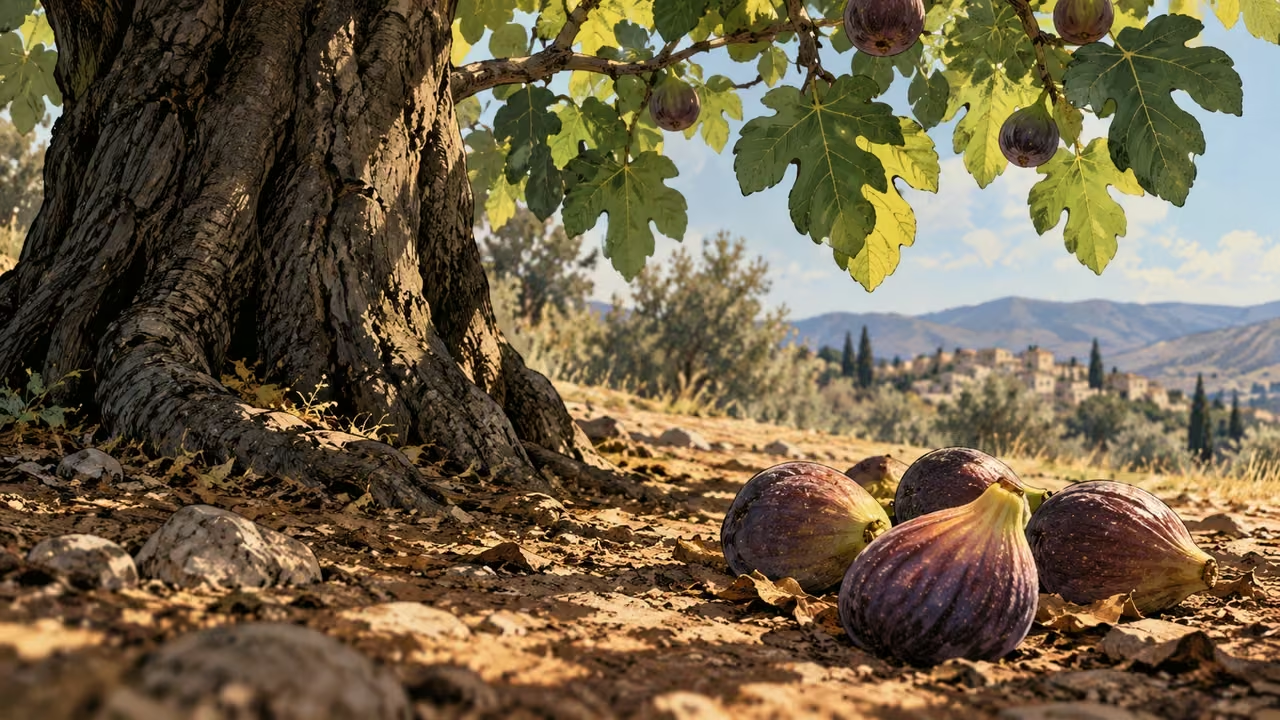
Story guide: The separated tree and fruit illustrate the comparison in the reply, not a portrait or blanket judgment of the people named in the text.
Open this scene in the reader →2"From what I say to you, you do not know who I am. But you have become like the Jews, for they love the tree but hate its fruit, and they love the fruit but hate the tree."
Step through the story beside the Scripture itself. About the People’s Open Bible