Graphic Bible · Scene 1 of 1
Historical Library · Nag Hammadi
Images illustrate this work’s literary teaching, not authenticated historical events or portraits.
Source and translation notes
Anonymous. The prologue attributes the sayings to Didymos Judas Thomas; this is not proof of historical authorship.
Nag Hammadi Codex II (NHAM 02), pp. 32–51 · Sahidic Coptic with Lycopolitan features
Source edition: Coptic Scriptorium — Paul Dilley, 2025 (v6.2.0) · CC-BY 4.0
POB source revision and machine cross-check records do not establish independent scholarly certification.
Prologue 0 and sayings 1-114 are retained. Numbered paragraphs within a saying are modern reader units, not ancient verse numbering.
Gospel of Thomas 56:1
The World and the Corpse
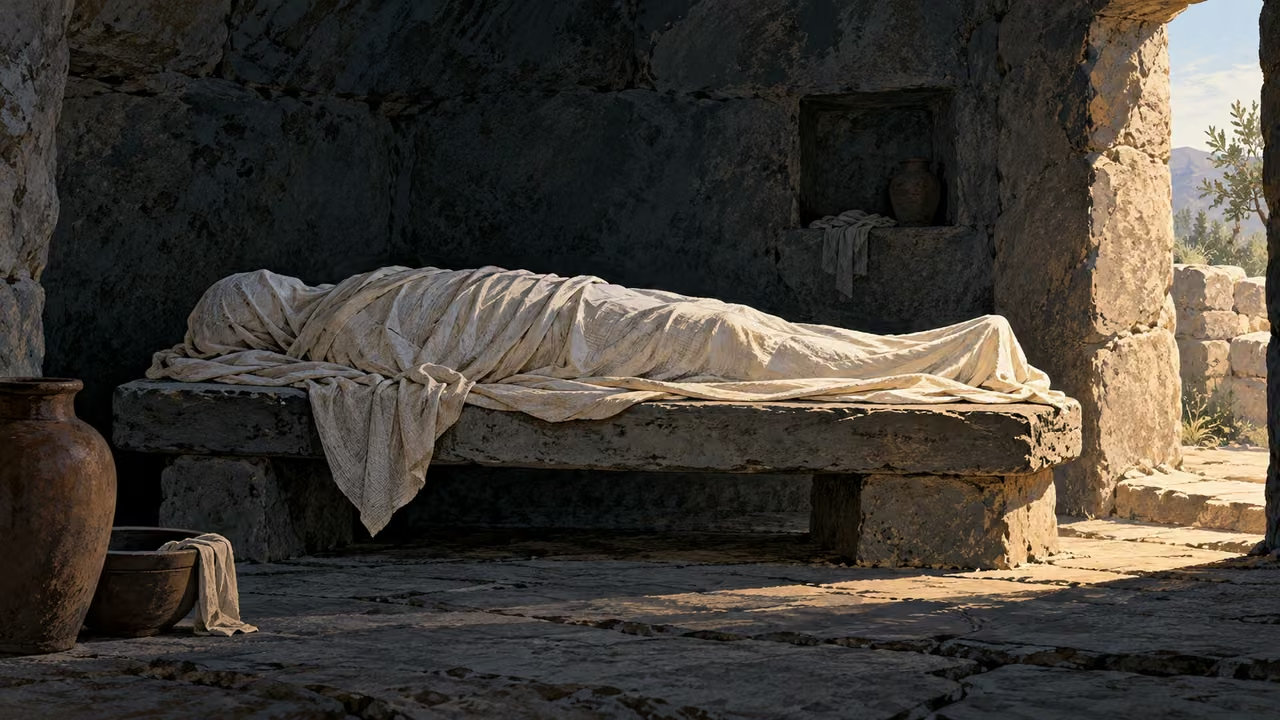
Story guide: The covered form accompanies the saying’s stark corpse comparison without identifying a person or inventing a narrated death.
Open this scene in the reader →1Jesus said: Whoever has come to know the world has found a corpse; and whoever has found the corpse, the world is not worthy of him.
Step through the story beside the Scripture itself. About the People’s Open Bible