Graphic Bible · Scene 7 of 13
Leviticus 25:23-28
An inherited field redeemed
Sabbath Years and Jubilee · Leviticus 25
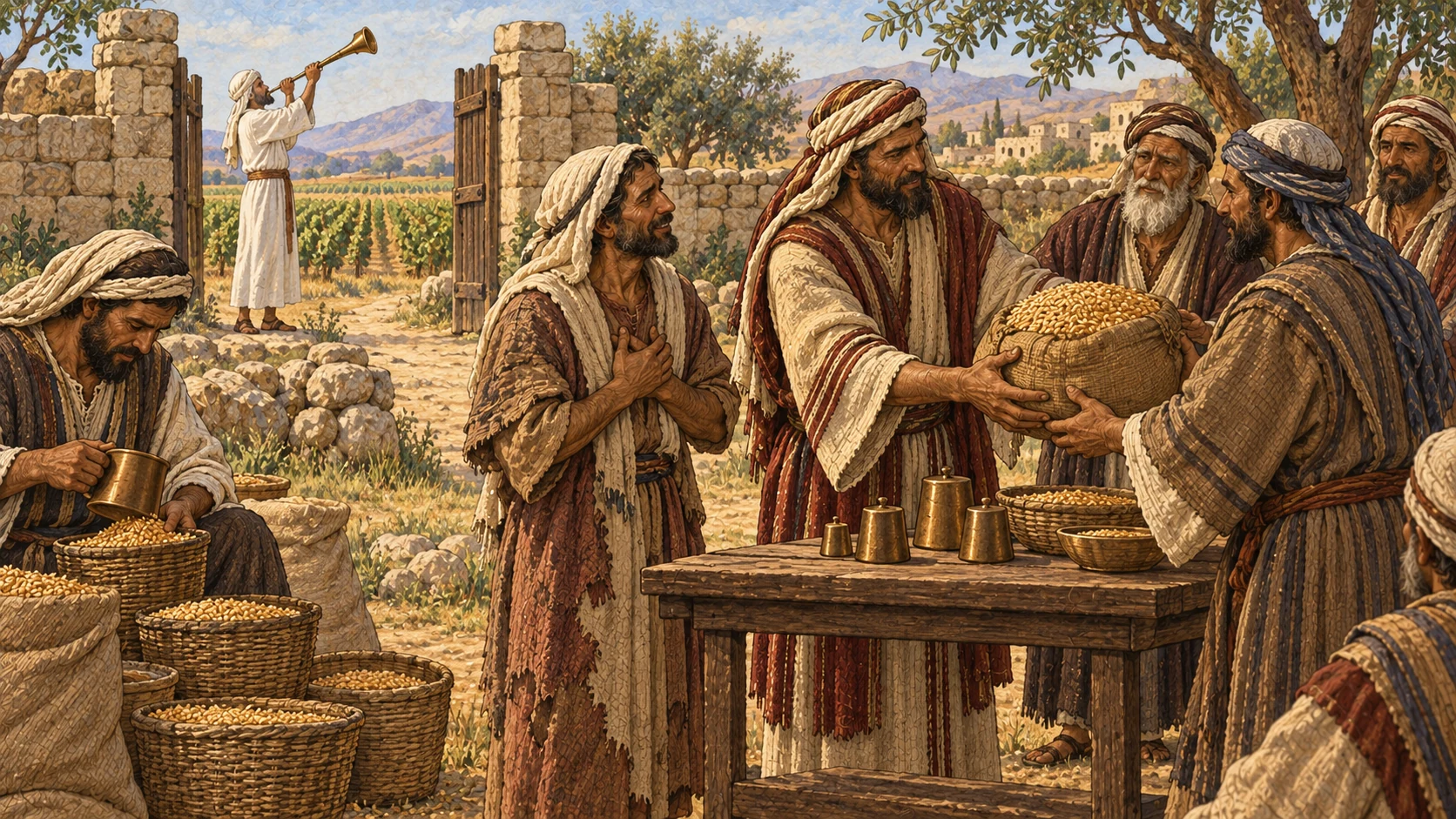
Story guide: A poor farmer who sold part of his inherited field receives it back as his nearest kinsman-redeemer pays the buyer before elders. A second farmer counts fair surplus for self-redemption, while a Jubilee trumpet promises eventual return where means remain insufficient. No permanent land deed, coercion, eviction, written arithmetic, modern currency, or visible deity.
Open this scene in the reader →23The land must not be sold permanently, because the land is mine. For you are strangers and sojourners with me.
24And in all the land of your possession, you shall grant redemption for the land.
25If your brother becomes poor and sells some of his property, then his nearest kinsman-redeemer shall come and redeem what his brother has sold.
26But if a man has no redeemer, and his hand attains enough and he finds sufficient means for his redemption,
27then he shall calculate the years since its sale and return the surplus to the man to whom he sold it, and he shall return to his property.
28But if his hand does not find enough to restore it to him, then what he sold shall remain in the hand of the one who bought it until the year of Jubilee; and it shall go out in the Jubilee, and he shall return to his property.
Step through the story beside the Scripture itself. About the People’s Open Bible