Graphic Bible · Scene 2 of 5
Historical Library · Apostolic Fathers
Shepherd of Hermas — Vision 3, section vii
The available POB edition is a partial translation, not a summary or the complete ancient work. Popular, not Scripture. Artwork interprets literary visions and teaching; it does not establish their portrayals as historical events.
Source and translation notes
The text names Hermas as its narrator. The illustrations do not identify a historical author or supply authenticated portraits.
Existing reader manuscript-image reference: Codex Sinaiticus. Working source: Lightfoot & Harmer 1891 (normalized OCR) · Greek
English witness: People's Open Bible provisional English rendering (Cartha Inc. and contributors) · CC BY 4.0 — https://creativecommons.org/licenses/by/4.0/ — for POB project outputs; source editions retain their original licenses
Numbered reading units are modern paragraph divisions, not ancient verse numbers. The available units follow Visions, Mandates, and Similitudes; absent passages are not reconstructed.
- The available edition begins mid-dialogue and ends mid-sentence in Similitude 8.iv; absent passages are not supplied.
- Reading paragraph 2 [a]: Repentance and related expressions are read in this works own context; they are not restricted to feeling sorry, and no uniform Godward formula is imposed. Use repentance for moral change while preserving the works own teaching about baptism, forgiveness, conduct and the angel of repentance; do not impose a different tradition on it.
- Reading paragraph 3 [a]: Repentance and related expressions are read in this works own context; they are not restricted to feeling sorry, and no uniform Godward formula is imposed. Retain change their minds: this is retreat from baptism or vacillation into divination, not repentance toward God. Preserve the adverse direction.
- Reading paragraph 4 [a]: Repentance and related expressions are read in this works own context; they are not restricted to feeling sorry, and no uniform Godward formula is imposed. Use repentance for moral change while preserving the works own teaching about baptism, forgiveness, conduct and the angel of repentance; do not impose a different tradition on it.
Shepherd of Hermas 15:2
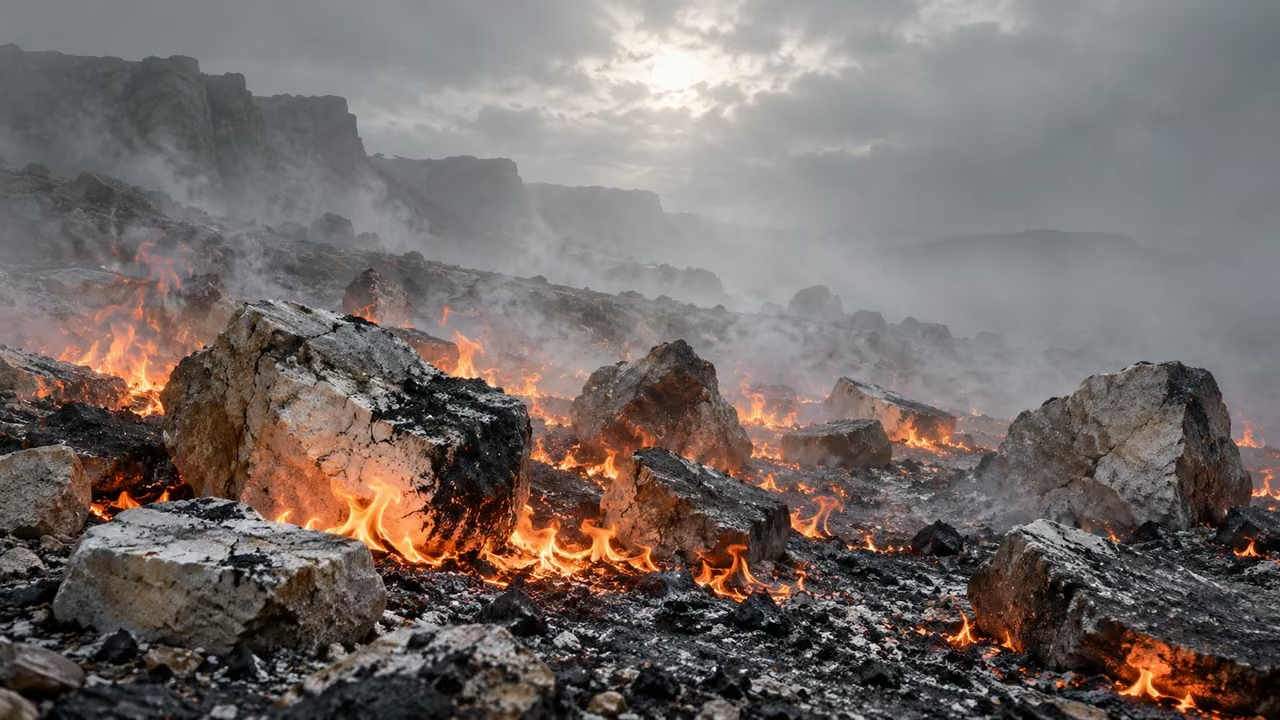
Stones in the Fire
The Rejected Stones and Another Place · Shepherd of Hermas 15
Story guide: The stones appear amid flame and ash in a recalling essay. The woman’s words explain the human meaning assigned to this image.
Open this scene in the reader →2But those that fall into the fire and are burned—these are the ones who have finally turned away from the living God, and it no longer came up into their heart to repent because of the desires of their lewdness and the evils they have done.
Step through the story beside the Scripture itself. About the People’s Open Bible