Graphic Bible · Scene 3 of 6
Historical Library · Apostolic Fathers
Shepherd of Hermas — Mandate 10, section i
The available POB edition is a partial translation, not a summary or the complete ancient work. Popular, not Scripture. Artwork interprets literary visions and teaching; it does not establish their portrayals as historical events.
Source and translation notes
The text names Hermas as its narrator. The illustrations do not identify a historical author or supply authenticated portraits.
Existing reader manuscript-image reference: Codex Sinaiticus. Working source: Lightfoot & Harmer 1891 (normalized OCR) · Greek
English witness: People's Open Bible provisional English rendering (Cartha Inc. and contributors) · CC BY 4.0 — https://creativecommons.org/licenses/by/4.0/ — for POB project outputs; source editions retain their original licenses
Numbered reading units are modern paragraph divisions, not ancient verse numbers. The available units follow Visions, Mandates, and Similitudes; absent passages are not reconstructed.
- The available edition begins mid-dialogue and ends mid-sentence in Similitude 8.iv; absent passages are not supplied.
Shepherd of Hermas 37:3
The Difficult Saying
Sorrow, Understanding, and the Neglected Vineyard · Shepherd of Hermas 37
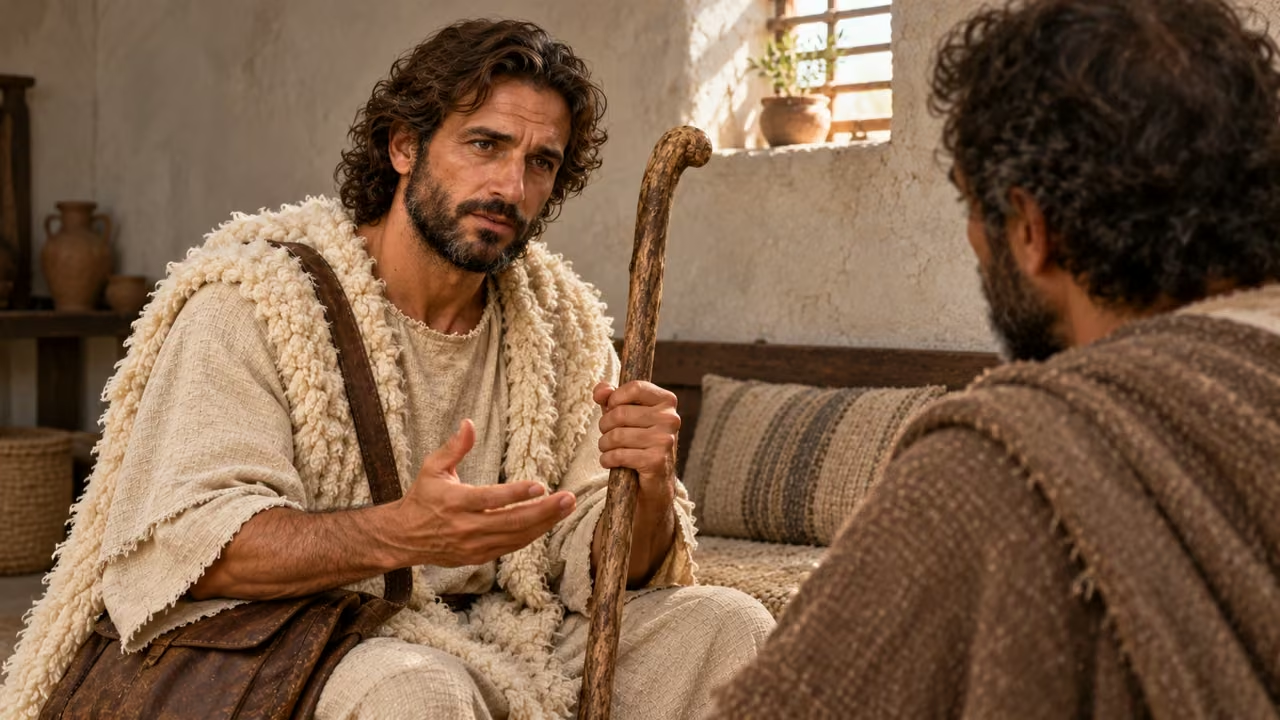
Story guide: The shepherd describes sorrow’s effects in a difficult saying about the Holy Spirit.
Open this scene in the reader →3“You are senseless, man,” he says, “and do you not perceive that sorrow is more evil than all the spirits and most dreadful for the servants of God, and that beyond all the spirits it destroys a person and wears away the Holy Spirit—and then saves again?”
Step through the story beside the Scripture itself. About the People’s Open Bible