Graphic Bible · Scene 1 of 1
Historical Library · Apostolic Fathers
Shepherd of Hermas — Mandate 10, section ii
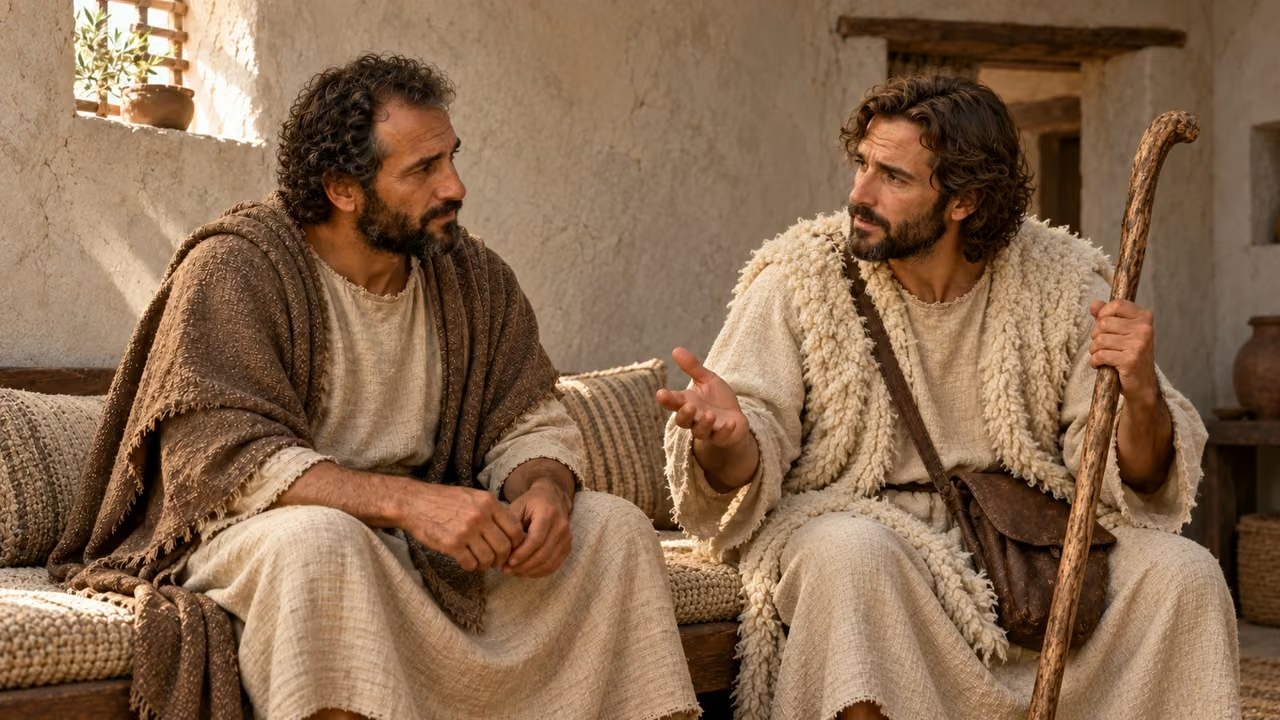
The available POB edition is a partial translation, not a summary or the complete ancient work. Popular, not Scripture. Artwork interprets literary visions and teaching; it does not establish their portrayals as historical events.
Source and translation notes
The text names Hermas as its narrator. The illustrations do not identify a historical author or supply authenticated portraits.
Existing reader manuscript-image reference: Codex Sinaiticus. Working source: Lightfoot & Harmer 1891 (normalized OCR) · Greek
English witness: People's Open Bible provisional English rendering (Cartha Inc. and contributors) · CC BY 4.0 — https://creativecommons.org/licenses/by/4.0/ — for POB project outputs; source editions retain their original licenses
Numbered reading units are modern paragraph divisions, not ancient verse numbers. The available units follow Visions, Mandates, and Similitudes; absent passages are not reconstructed.
- The available edition begins mid-dialogue and ends mid-sentence in Similitude 8.iv; absent passages are not supplied.
- Reading paragraph 1 [a]: Repentance and related expressions are read in this works own context; they are not restricted to feeling sorry, and no uniform Godward formula is imposed. Use repentance for moral change while preserving the works own teaching about baptism, forgiveness, conduct and the angel of repentance; do not impose a different tradition on it.
Shepherd of Hermas 38:1
Sorrow and Repentance
How Sorrow Wears Down and Leads to Repentance · Shepherd of Hermas 38
Story guide: The shepherd distinguishes disappointment after failure from sorrow that leads to repentance, then warns against afflicting the Spirit.
Open this scene in the reader →1“Listen, then,” he says, “foolish one, how sorrow wears down the Holy Spirit and then again saves. Whenever the double‑minded person undertakes some action and fails in it because of his double‑mindedness, this sorrow enters into the person and grieves the Holy Spirit and wears it down. Then again, when quick temper clings to a person concerning some matter, and he becomes exceedingly embittered, again sorrow enters into the heart of the person who became quick‑tempered, and he is grieved over the deed that he did and repents, because he did what is evil. This sorrow, then, seems to bring salvation, because after doing what is evil he repented. Therefore both things grieve the Spirit: double‑mindedness, because it did not attain its purpose; and quick temper grieves the Spirit, because it did what is evil. Both, then, are grievous to the Holy Spirit—double‑mindedness and quick temper. Remove, therefore, sorrow from yourself, and do not afflict the Holy Spirit that dwells in you, lest it appeal to God and depart from you. For the Spirit of God that was given to this flesh does not endure sorrow or distress.”
Step through the story beside the Scripture itself. About the People’s Open Bible