Graphic Bible · Scene 8 of 17
Historical Library · Apostolic Fathers
Shepherd of Hermas — Mandate 11
The available POB edition is a partial translation, not a summary or the complete ancient work. Popular, not Scripture. Artwork interprets literary visions and teaching; it does not establish their portrayals as historical events.
Source and translation notes
The text names Hermas as its narrator. The illustrations do not identify a historical author or supply authenticated portraits.
Existing reader manuscript-image reference: Codex Sinaiticus. Working source: Lightfoot & Harmer 1891 (normalized OCR) · Greek
English witness: People's Open Bible provisional English rendering (Cartha Inc. and contributors) · CC BY 4.0 — https://creativecommons.org/licenses/by/4.0/ — for POB project outputs; source editions retain their original licenses
Numbered reading units are modern paragraph divisions, not ancient verse numbers. The available units follow Visions, Mandates, and Similitudes; absent passages are not reconstructed.
- The available edition begins mid-dialogue and ends mid-sentence in Similitude 8.iv; absent passages are not supplied.
- Reading paragraph 4 [a]: Repentance and related expressions are read in this works own context; they are not restricted to feeling sorry, and no uniform Godward formula is imposed. Retain change their minds: this is retreat from baptism or vacillation into divination, not repentance toward God. Preserve the adverse direction.
Shepherd of Hermas 40:8
Gentleness and Humility
Testing the Prophet by the Life · Shepherd of Hermas 40
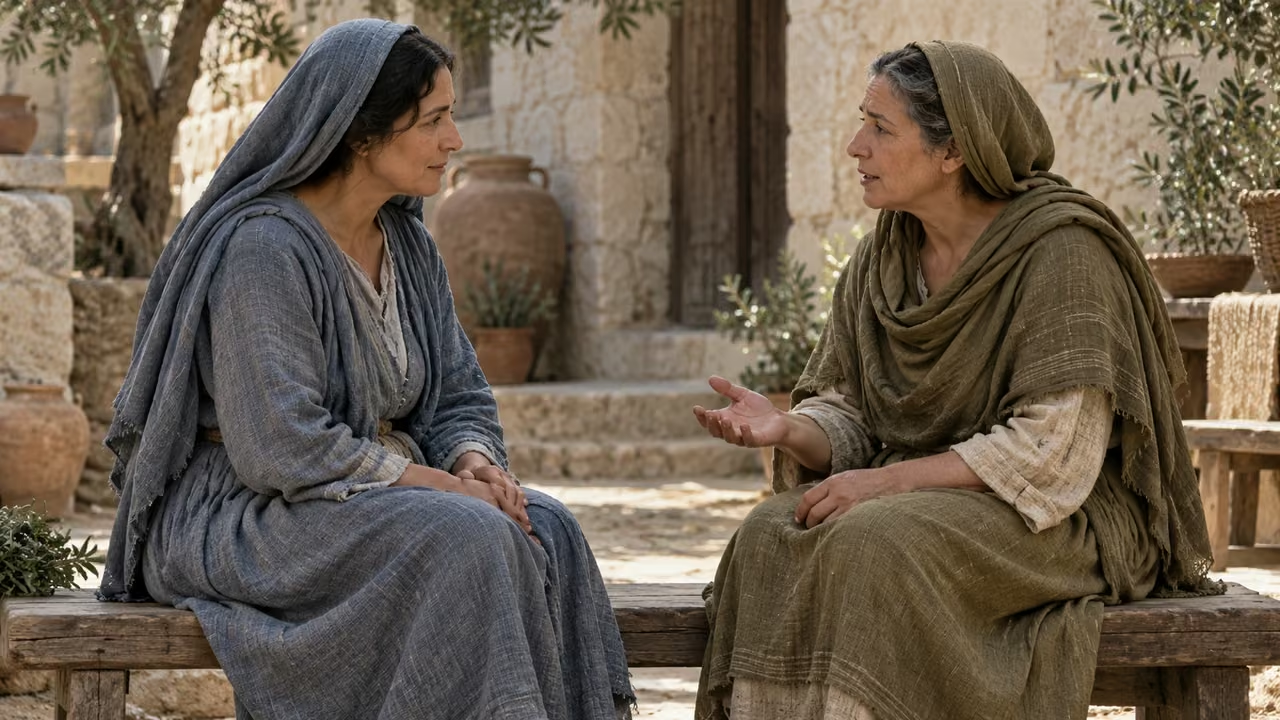
Story guide: A quiet conversation accompanies the description of gentleness and humility.
Open this scene in the reader →88. First of all, the one who has the [divine] spirit from above is gentle and quiet and humble‑minded, and refrains from every evil and from the vain desire of this age, and makes himself lower than all people; and when consulted he answers nothing to anyone, nor does he speak privately—nor does the holy Spirit speak whenever a person wishes it to speak—but it speaks when God wishes him to speak.
Step through the story beside the Scripture itself. About the People’s Open Bible