Graphic Bible · Scene 4 of 5
Historical Library · Apostolic Fathers
Shepherd of Hermas — Mandate 12, section v
The available POB edition is a partial translation, not a summary or the complete ancient work. Popular, not Scripture. Artwork interprets literary visions and teaching; it does not establish their portrayals as historical events.
Source and translation notes
The text names Hermas as its narrator. The illustrations do not identify a historical author or supply authenticated portraits.
Existing reader manuscript-image reference: Codex Sinaiticus. Working source: Lightfoot & Harmer 1891 (normalized OCR) · Greek
English witness: People's Open Bible provisional English rendering (Cartha Inc. and contributors) · CC BY 4.0 — https://creativecommons.org/licenses/by/4.0/ — for POB project outputs; source editions retain their original licenses
Numbered reading units are modern paragraph divisions, not ancient verse numbers. The available units follow Visions, Mandates, and Similitudes; absent passages are not reconstructed.
- The available edition begins mid-dialogue and ends mid-sentence in Similitude 8.iv; absent passages are not supplied.
Shepherd of Hermas 45:4
The Full and Empty Jars
The Full and Empty Wine Jars · Shepherd of Hermas 45
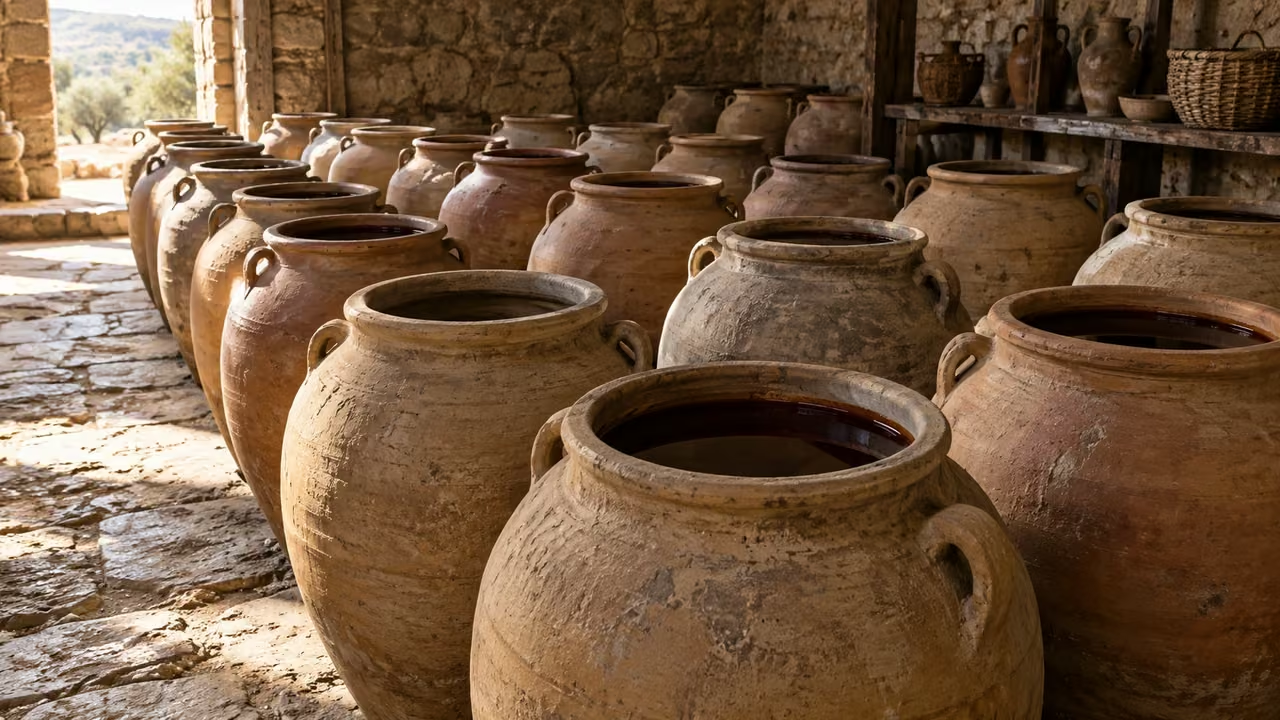
Story guide: Rows of full jars and an empty-jar detail accompany the wine comparison.
Open this scene in the reader →4"When a man fills very many clay jars with good wine, and among those jars a few are empty, he comes to the jars and does not inspect the full ones—for he knows they are full—but he inspects the empty ones, fearing lest they have turned sour; for empty jars quickly turn sour, and the pleasure of the wine is lost.
Step through the story beside the Scripture itself. About the People’s Open Bible