Graphic Bible · Scene 1 of 2
Historical Library · Apostolic Fathers
Shepherd of Hermas — Similitude 2
The available POB edition is a partial translation, not a summary or the complete ancient work. Popular, not Scripture. Artwork interprets literary visions and teaching; it does not establish their portrayals as historical events.
Source and translation notes
The text names Hermas as its narrator. The illustrations do not identify a historical author or supply authenticated portraits.
Existing reader manuscript-image reference: Codex Sinaiticus. Working source: Lightfoot & Harmer 1891 (normalized OCR) · Greek
English witness: People's Open Bible provisional English rendering (Cartha Inc. and contributors) · CC BY 4.0 — https://creativecommons.org/licenses/by/4.0/ — for POB project outputs; source editions retain their original licenses
Numbered reading units are modern paragraph divisions, not ancient verse numbers. The available units follow Visions, Mandates, and Similitudes; absent passages are not reconstructed.
- The available edition begins mid-dialogue and ends mid-sentence in Similitude 8.iv; absent passages are not supplied.
Shepherd of Hermas 48:1
Use Wealth for Service
The Rich, the Needy, and the Elm and Vine · Shepherd of Hermas 48
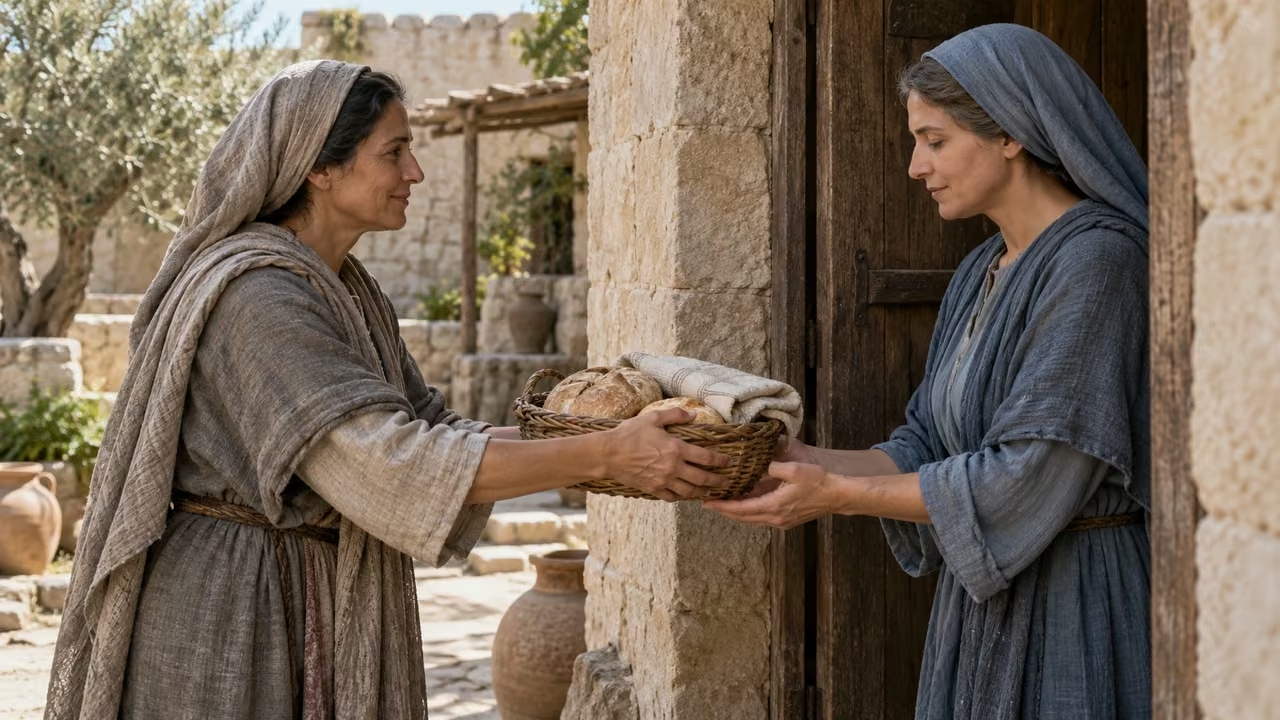
Story guide: An image of sharing accompanies the instruction to use wealth for service.
Open this scene in the reader →1For to this end the Master has made you rich, that you might carry out these ministries for him; it is far better to buy such fields [and estates] and houses, which you will find in your city when you arrive in it. This luxury is good and cheerful, having no grief nor fear, but having joy. So do not practice the luxury of the nations; for it is unprofitable for you, the servants of God. Rather practice your own luxury, in which you are able to rejoice. For all luxury of this kind is profitable. But the luxury of the nations is bitter and harsh. This parable, then, is set before the servants of God, for the poor and the rich.
Step through the story beside the Scripture itself. About the People’s Open Bible