Graphic Bible · Scene 1 of 4
Historical Library · Apostolic Fathers
Shepherd of Hermas — Similitude 5, section v
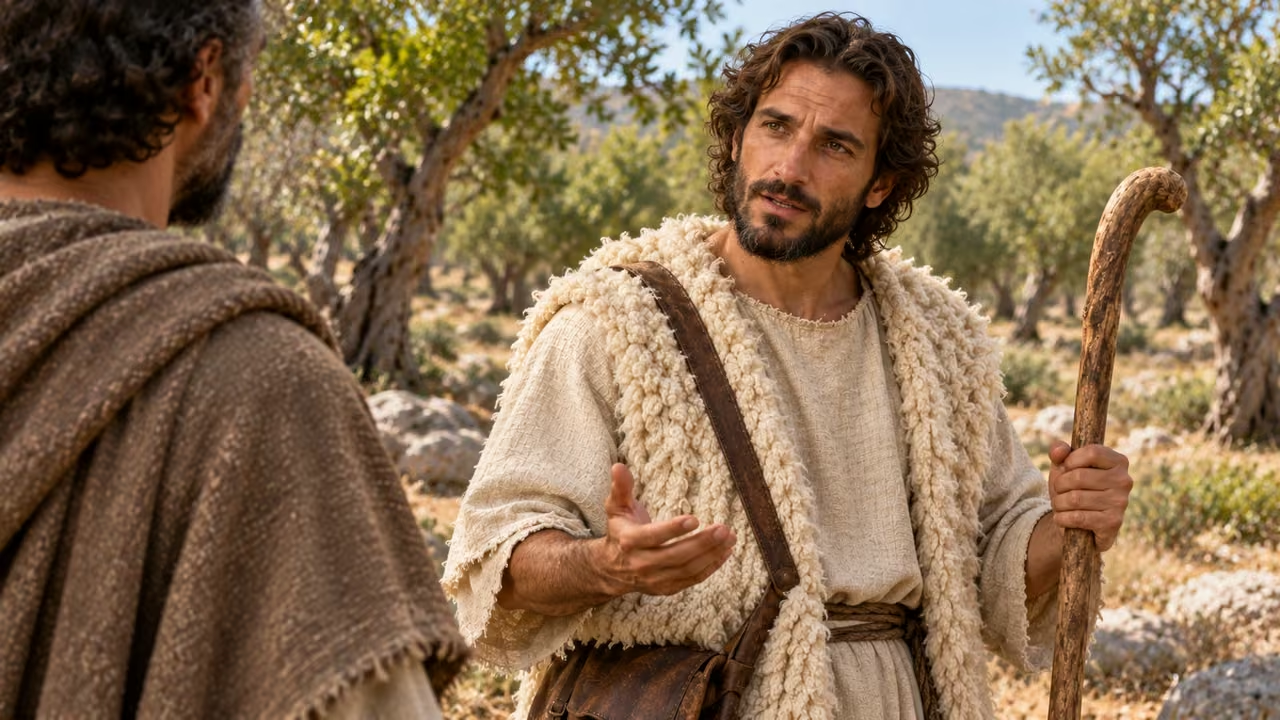
The available POB edition is a partial translation, not a summary or the complete ancient work. Popular, not Scripture. Artwork interprets literary visions and teaching; it does not establish their portrayals as historical events.
Source and translation notes
The text names Hermas as its narrator. The illustrations do not identify a historical author or supply authenticated portraits.
Existing reader manuscript-image reference: Codex Sinaiticus. Working source: Lightfoot & Harmer 1891 (normalized OCR) · Greek
English witness: People's Open Bible provisional English rendering (Cartha Inc. and contributors) · CC BY 4.0 — https://creativecommons.org/licenses/by/4.0/ — for POB project outputs; source editions retain their original licenses
Numbered reading units are modern paragraph divisions, not ancient verse numbers. The available units follow Visions, Mandates, and Similitudes; absent passages are not reconstructed.
- The available edition begins mid-dialogue and ends mid-sentence in Similitude 8.iv; absent passages are not supplied.
Shepherd of Hermas 52:1
The Persistent Questioner
The Interpretation of the Vineyard · Shepherd of Hermas 52
Story guide: The shepherd answers the persistent question and connects the parable’s digging with labor.
Open this scene in the reader →1He says, “I told you just now that you are crafty and headstrong, asking for the interpretations of the parables. But since you are so persistent, I will interpret for you the parable of the field and the rest. He entrusted them to the angels to keep them; and he himself cleansed their sins, having labored much and endured many toils—for no one can dig without toil or labor.
Step through the story beside the Scripture itself. About the People’s Open Bible