Graphic Bible · Scene 8 of 17
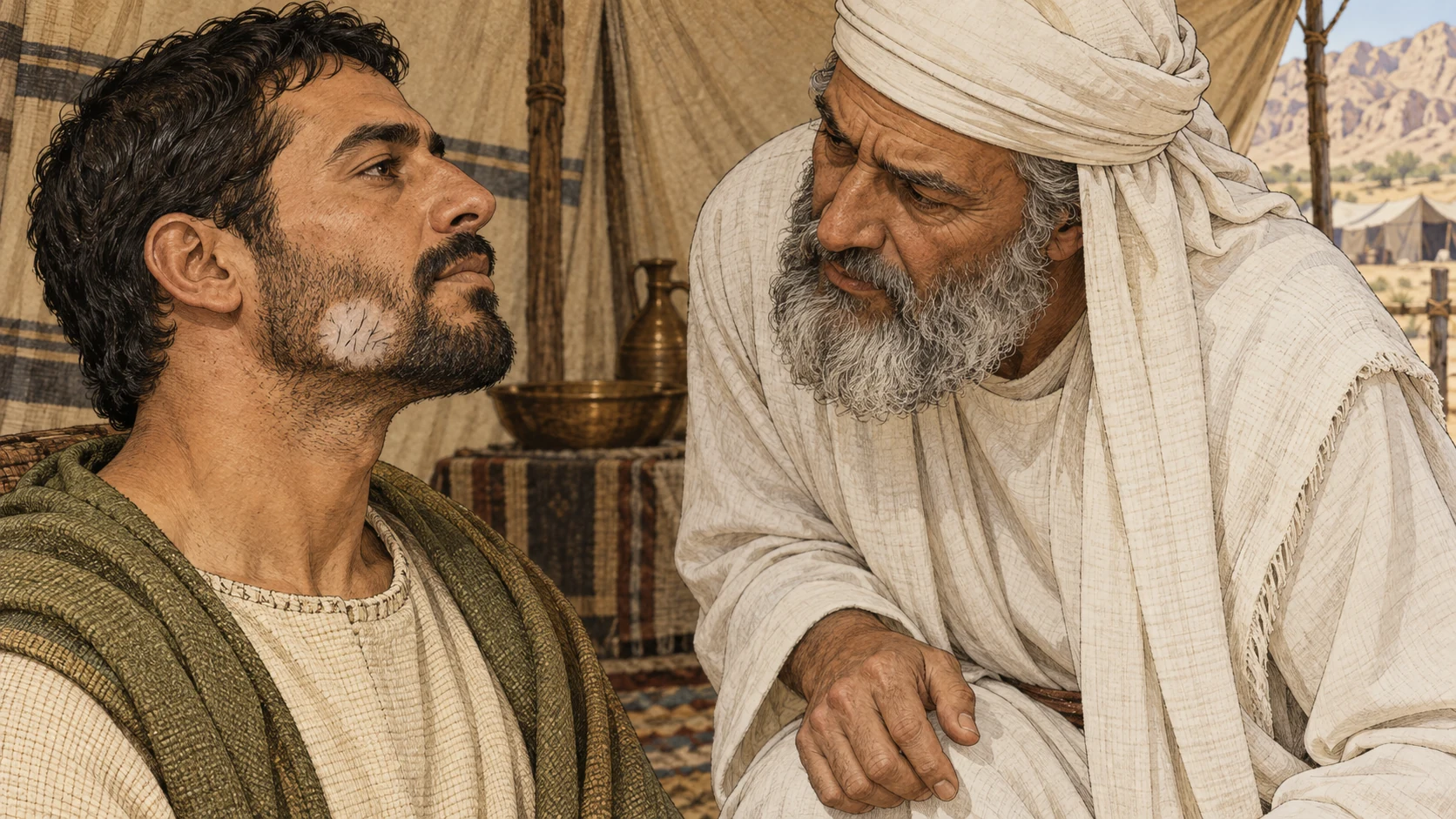
Leviticus 13:29-37
A scalp or beard spot observed
Examining Skin and Garments · Leviticus 13
Story guide: A white-linen priest examines a pale patch at a man’s beard line with dark hairs visible within it. The image depicts the final examination in verse 37; the accompanying verses preserve the observation periods, shaving, washing, and alternative findings.
Open this scene in the reader →29When a man or a woman has an infection on the head or on the beard,
30And the priest shall examine the diseased area, and behold, its appearance is deeper than the skin, and in it is thin yellow hair, then the priest shall pronounce him unclean; it is an itch, a skin disease of the head or of the beard.
31And if the priest examines the diseased area of the scaly outbreak, and indeed its appearance is not deeper than the skin and there is no black hair in it, then the priest shall isolate the diseased area of the scaly outbreak for seven days.
32And the priest shall examine the diseased area on the seventh day, and behold, if the scaly infection has not spread, and there is no yellow hair in it, and the appearance of the scaly infection is not deeper than the skin,
33then he shall shave himself, but he shall not shave the scaly spot; and the priest shall isolate the scaly spot for seven days a second time.
34Then the priest shall examine the scaly infection on the seventh day, and if the scaly infection has not spread in the skin and its appearance is not deeper than the skin, the priest shall pronounce him clean. He shall wash his clothes and be clean.
35But if the scaly eruption does spread in the skin after his cleansing,
36And if the priest examines him, and behold, the scaly infection has spread in the skin, the priest need not look for the yellow hair; he is unclean.
37But if in his sight the scaly eruption has remained unchanged, and black hair has grown in it, the scaly eruption is healed; he is clean, and the priest shall pronounce him clean.
Step through the story beside the Scripture itself. About the People’s Open Bible